

.png)
Siemens Gamesa: ~50% Reduction in Design Cycle Time in High-Uncertainty R&D
Case Summary
- 01
Challenges
- High uncertainty in scope and sequencing of R&D work
- Frequent design iterations causing rework
- Limited visibility into end-to-end workflow across functions
- Over-reliance on complex, static plans not followed in execution
- Local optimization instead of system-level focus
- Weak milestone tracking and execution control
- Reactive re-prioritization leading to timeline overruns
- 02
Our Work
- Implemented a Two-Tier Task planning framework
- Defined ~50 Tier-1 tasks with clear inputs, outputs, and ownership
- Enabled flexible execution via short-cycle Tier-2 tasks (1–3 weeks)
- Mapped actual workflows through expert-led workshops
- Reduced over-detailed planning; focused on structural clarity
- Introduced buffer-based planning to manage uncertainty
- Aligned teams to optimize flow, not individual tasks
- 03
Results
- ~50% reduction in design cycle time
- Significant reduction in rework and spillovers
- Improved cost and quality adherence
- Stronger cross-functional alignment and ownership
Context
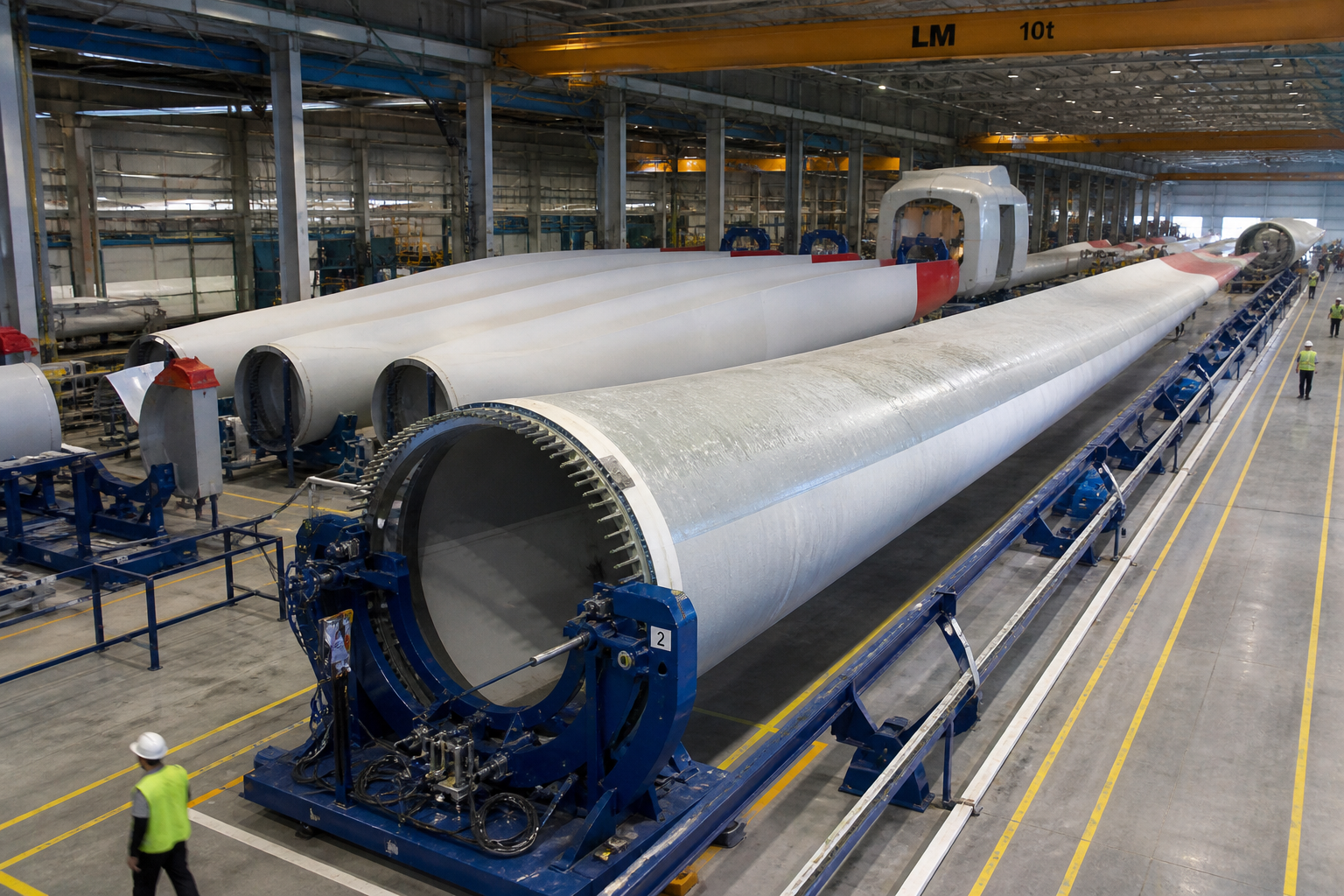
Siemens Gamesa operates in a high-uncertainty R&D environment, developing wind turbine platforms involving multiple engineering disciplines, mechanical, electrical, hydraulics, aero design, manufacturing, procurement, and quality. Typical R&D cycle times were approximately two years, with increasing pressure to reduce this to nearly one year, implying a ~50% reduction driven by market demands.
Business Challenge
Despite strong engineering capability, planning and execution were consistently constrained by structural issues. There was high uncertainty in scope and sequence of work, and iterative design cycles often led to spillovers across phases, commonly referred to as “travelled work.” At the same time, there was limited visibility into how work actually flowed across functions.
Planning was heavily dependent on static, complex schedules that were difficult to build and maintain, and in practice, were rarely followed during execution. Given this complexity, teams defaulted to local optimization, focusing on what was manageable at an individual level rather than what was optimal for the system.
In practical terms, this translated into significant execution inefficiencies. Projects planned for a few months could extend dramatically, with one instance stretching from 2.5 months to 2.5 years. Milestone tracking at actionable levels was weak, and re-prioritization became frequent and reactive.
Intervention: Change Started from Planning Itself
Instead of forcing detailed planning upfront, Siemens Gamesa shifted its approach by implementing a Two-Tier Task structure.
At the first level, the entire R&D cycle was structured into approximately 50 Tier-1 tasks. Each of these tasks clearly defined inputs, outputs, and the required cross-functional team. Importantly, this level avoided forcing micro-level sequencing and was designed to be intuitively understood and validated by experts. This simplicity enabled senior experts to review and validate the entire process within minutes, creating alignment and clarity across the organization.
At the second level, detailed execution was managed within each Tier-1 block. These Tier-2 tasks were typically maintained within a duration of one to three weeks, allowing teams to retain flexibility in handling changing sequences, design iterations, and inherent engineering uncertainty. This separation ensured that planning did not attempt to over-specify work upfront, while still providing sufficient control during execution.
How the Approach Addressed Core Challenges
This structure directly addressed the underlying issues in execution. Uncertainty in scope and work sequencing was absorbed at the Tier-1 level, where the focus remained on defining what needed to be achieved rather than prescribing an exact sequence. This allowed teams to adapt without losing alignment.
Design iterations and spillovers were reduced by grouping related work into logical “boxes” executed by the same teams, minimizing cross-phase rework. Cross-functional alignment improved as eachTier-1 task inherently defined the required disciplines and inputs, eliminating ambiguity in team formation.
At the same time, planning effort was significantly reduced. Instead of building large, static schedules with thousands of line items, planning shifted toward establishing structural clarity. This enabled teams to focus on execution within defined blocks of work, reducing fragmentation and coordination overhead, and ultimately improving flow.
Execution Approach
The planning process began by mapping the actual workflow through structured sessions with domain experts. Rather than relying on assumptions, the approach focused on capturing how work was truly performed. This was done iteratively using workshops, post-it mapping, and repeated validation loops until a consistent structure emerged.
Duration estimates were based on expert judgment and were found to be within approximately ±10% accuracy. To manage uncertainty, task durations were reduced to around 70% of the estimated time, with the remaining uncertainty absorbed through an aggregated buffer of approximately 30%.
Results (Initial Phase)
In the conceptual design phase, Siemens Gamesa achieved approximately a 50% reduction in cycle time. Alongside this, there was a measurable improvement in quality outcomes, including adherence to cost targets and higher completeness of documentation. This also enabled earlier engagement with customers.
Equally important was the impact on execution stability. Once the Tier-1 structure was visible, organizational anxiety reduced significantly. Teams were no longer required to manage the complexity of the entire system at once and could instead focus on the next priority, improving both clarity and decision-making.
Key Learning
The core learning from this implementation was that clarity at the right level matters more than excessive detail. Tier-1structure provided the alignment and confidence required for execution, whileTier-2 handled variability where it actually existed.
It also became evident that organizations often do not have an explicit understanding of how work flows, as critical knowledge typically resides within experts. Structuring this knowledge creates immediate value. Finally, separating planning from execution proved essential, planning provides direction, while execution requires dynamic adjustment. As complexity reduced, buy-in improved, and teams moved from resistance to participation.
Conclusion
Two-Tier Task structuring did not simplify the work itself. It simplified how the work was understood, aligned, and executed.
In a high-uncertainty R&D environment, this shift enabled faster decision-making, reduced rework, measurable cycle time reduction, and better alignment across functions, without increasing planning effort or complexity.
Read relevant articles:
Critical chain project management (CCPM): why projects remain late and how CCPM actually fixes it?
Why projects are late even when everything seems managed?
Beyond fragmentation: Toyota's cell manufacturing model offers a blueprint for construction
What if our best attempts to minimize time and cost overruns in projects are pointless?
How can we solve the late project problem?
Implementing critical chain in large infrastructure projects
Part 1: Why critical chain is not a science?
Part 2: Who said critical chain is not a science?
“We were under pressure to significantly reduce our R&D cycle times, but the way we were planning and executing projects wasn’t supporting that. The plans were complex, difficult to maintain, and in practice, not followed.
What changed for us was shifting away from trying to detail everything upfront. Instead, we structured our work at a higher level, aligned cross-functional teams clearly, and managed execution within that structure.
In our conceptual design phase, we were able to reduce cycle time by roughly 50%, while also improving the quality of our outputs and meeting our cost targets. The approach brought clarity. Our teams could see how the work flows, focus on priorities, and make better decisions without getting lost in the complexity.”
Mr. Robert Fuller


Contact us to find out more
Our Customer Service Teams have hundreds of Industry specific studies to draw from ... get in touch if you want to see something specific to your needs, or simply explore how we can deliver Radical Results for you.

Pashan Sus Road, Pashan Pune. MH- 411021 IN